





a responsible
future
Thanks to the international education program Experimento, inquisitive teachers and students are discovering the world of science. Working on the project in 11 countries is also teaching Siemens Stiftung a thing or two. Here is a look behind the scenes.
STEM subjects bring children closer to fundamental aspects of our lives: the environment, sustainability, climate change, and energy supply. Strong abilities in science, technology, engineering, and mathematics (STEM) create opportunities for advancing in a fast-paced world that are independent of personal background and economic status. Siemens Stiftung’s education program Experimento provides educators in 11 countries with ready-made methods to teach children the skills they will need for a successful future.
The idea behind Experimento is simple: The only way to awaken a passion for science and technology is through hands-on experimentation and inquiry-based learning. Just like the inquisitive students and teachers discovering the world of science together, Siemens Stiftung is constantly learning new lessons through Experimento’s international project work: from the search for good partners, to adapting the program to local needs.
It comes down
to good partners
To successfully establish the Experimento program in Latin America and Africa, Siemens Stiftung works together with several partner organizations: universities, teacher training institutes, schools, vocational training centers, social enterprises, foundations, bilateral and multilateral agencies, and public officials. »At the beginning, listening is the most important,« says Rebecca Ottmann, the Experimento project lead in Africa. »Our partners in Africa know that science and technology education is a key factor in creating new jobs. The local stakeholders have developed strategies and methods for teacher training and continuing education in STEM subjects that we had to get adjusted to at first.« Ulrike Wahl, an external advisor to Siemens Stiftung, adds that STEM education plays an important role in Latin America, too. »Some countries have very innovative and ambitious approaches that education stakeholders in Germany could learn from,« says Wahl.


With the steadily growing interest in STEM education around the world, it does not take long for Siemens Stiftung to find a receptive audience in new countries where Experimento is introduced. »At the beginning of a partnership, it is our job to find areas where Experimento can expand and reinforce existing teacher training and continuing education programs,« explains Barbara Filtzinger, head of the education working area at Siemens Stiftung. »As a corporate foundation from abroad, we’re definitely being put to the test during our initial discussions.«
It is up to Siemens Stiftung to prove itself as a trustworthy partner for long-term engagement and show that what is being offered represents a relevant contribution to quality STEM education. »Education is a delicate, political issue in every country,« says Filtzinger. »We take great care to make sure we aren’t roped in by any particular party. We are valued much more as a partner that offers a best-practice approach and acts as a politically-neutral stakeholder initiating new networks,« she adds.
Experience has shown how important it is to collaborate with the right partners for the success of the program. Universities and technical colleges usually take on the program’s didactic adaption for the curriculum of each country. Public institutions bring together partners for joint STEM education initiatives, and civil society stakeholders organize teacher training at educational institutions.
Beyond that, ideas from partners regularly contribute to Experimento’s development. »The foundation thinks and acts collaboratively with others. In the spirit of open exchange and creative action, there are always more opportunities to create something new,« Wahl says.
What holds a city together amid rapid economic, environmental, and societal change? How is identity formed in an urban space? What is the role of »blind spots,« forgotten and neglected places in a city? CHANGING PLACES/ESPACIOS REVELADOS creates artistic interventions that reveal new perspectives on how people live together in South American cities.
CHANGING PLACES/ESPACIOS REVELADOS is not a traveling exhibition. Instead, it is shaped by the unique issues of each host city, from the 2014 edition in Buenos Aires, to 2016’s program in Santiago de Chile. The key to the project’s success is the active participation of local and international partners from the public and private sector, in addition to artists and neighborhoods. Sharing costs among all partners is an important factor as well. The next edition of the series is planned for Colombia.
In Colombia, the CHANGING PLACES/ESPACIOS REVELADOS culture project will call attention to some of the country’s growing social questions, such as the slowly-progressing peace process, wide-spread migration, water issues, and the deep divide between the rich and the poor. These are issues that can only be addressed with an interdisciplinary approach, which requires bringing together a wide range of interests. Local issues and the pace of collaboration among partners dictate this process. The past has shown that this is the best approach to ensure the artistic interventions have a longlasting impact on the people of the city.


»The result is the best of both. Chile provides one example, where the Universidad de Chile’s ECBI program (Educación en ciencias basada en la indagación) has been combined with Experimento and is being used by local partner organizations.« The Freudenberg Foundation already focused on linking curriculum content and societal engagement. Working with them, Siemens Stiftung developed the project Service Learning in STEM Subjects. Aspects of that project include children creating games for learning about health with tips for a healthy diet. Eventually, the kids promote a healthy school breakfast at the primary schools in their city based on basic knowledge they learned in science class. In March 2017, Siemens Stiftung put on the »STEM and Values« conference, which saw more than 100 experts from science, education, and politics discuss how values can be taught in the classroom. Service Learning in STEM Subjects was presented as part of the event.
The need for local
adaptation
No two countries are alike, which is why the education program in each region is available modularly, allowing it to be connected to existing initiatives.


Together with its partners, Siemens Stiftung carefully considers how the Experimento program can be adapted to the unique challenges of each country’s curriculum, and a country’s geographic, climactic, and cultural circumstances are an important factor. Chile provides a striking example of what this means. The country stretches several thousand kilometers from the Atacama Desert in the north – one of the driest places on Earth – all the way to the eternal ice of Antarctica. Not only does Experimento need to conform to the Chilean curriculum, but the teaching materials must also be adapted for the different conditions in each region. The food pyramid, for example, is comprised of different fruits, vegetables, and grains in the Antarctic region than it is in the desert region.
The traditions of the indigenous people and their knowledge of how to put their natural resources to use are also quite important in Chile, shaping the family backgrounds of many schoolchildren. Martín Bascopé, program director of the education faculty at the Pontificia Universidad Católica de Chile in Villarrica, works with Experimento at schools in Araucanía in the middle of the country. »Children learn particularly quickly and in a way that sticks when the things they learn are related to their day-to-day lives,« he says. »As an example, we take the dyeing technique used on the traditional ponchos of the Mapuche to teach children about the underlying chemical processes.«
Adapting Experimento to regional circumstances is also necessary in Africa. »In Nairobi, it is completely dark all year round by about seven in the evening, and many children don’t have lights at home in their sheet-metal huts,« explains Experimento trainer Dieter Arnold. »That’s why we worked on small LED lights with the children in Experimento lessons that they could then take home with them.« A solar charging station was also built on the school grounds. »That provides the kids with light at home for a week,« Arnold says. The practical application of the children’s school education helps improve the quality of life for the entire family.
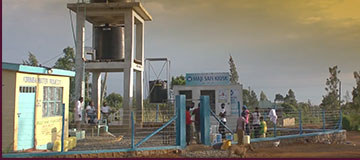
Last year, months without rain were followed by serious flooding that threatened the region. Experts predict that extreme weather events like these will occur more often in the future, with fatal consequences for people living in affected areas. This is changing the foundation’s work at the 19 water kiosks in Kenya, Tanzania, and Uganda.
Depending on the impact of drought periods, it may be necessary to utilize different filtering technology or to install different pumping systems. Receding water levels in levees or riverbeds mean more than just longer distances for transporting water – a higher concentration of pathogenic bacteria is also likely. Prefilters have been installed at some kiosks, while others have been outfitted with larger storage tanks.


These measures ensure that the kiosks can remain open during dry months that see many other water sources dry up. It also means that more people are coming to the Safe Water Enterprises from remote villages to purchase purified water instead of collecting contaminated water from other sources. This is particularly important during periods when waterborne diseases are widespread.
The need to adjust will continue in the future. By working with members of the empowering people. Network, Siemens Stiftung evaluates new technical solutions for dealing with brackish water and water-polluting chemicals, or for expanding transport capacity to reach outlying families.
The experiments are based on a set of materials and instructions that are provided to the teachers. Initially, Siemens Stiftung sent »Experimento kits« from Germany to each country. But it soon became clear that the contents needed to be better suited for each region and the day-to-day lives of the children there. This has led to local manufacturers taking over preparation of the experiment materials. Local production also means new jobs, and the materials can be assembled to meet each school’s exact needs.
Often, Siemens Stiftung takes a backseat to cooperation partners that put together their own kits. Many educators are even coming up with experiment materials from whatever they have lying around – necessity is the mother of invention, after all. In remote regions of Latin America, for example, teachers have a hard time getting the materials they need to take acidity or alkalinity measurements in chemistry classrooms. Experimento trainer Dieter Arnold shows them how they can create their own pH indicators using red cabbage. »It is often at this granular level where you have to carefully address the circumstances of a country,« Arnold says.
Real-world education is the
key to success
Experimento kits have been developed for various age groups and are all based on the method of inquiry-based learning: Experimento | 4+ for kindergarten and preschool, Experimento | 8+ for primary school and Experimento | 10+ for secondary schools. But lessons learned in Latin America and Africa have proven that assembling the experiments in each kit does not quite align with the exact requirements on the ground. The curriculum in each country emphasizes certain lessons to be taught in each grade, just as tried-and-true methods for inquiry-based learning in certain age groups are already established in some regions. Experimento is therefore set up modularly, so it can be changed and adapted as needed.


Comprehensive teacher training is the driving factor contributing to the quality and success of Experimento, putting teachers in a position to implement the inquiry-based learning methods.
This cannot be taken for granted: In many countries, strict regiments of memorization and recitation are still common practice in classrooms. »However, the interest in inquiry-based learning is enormous,« says Rebecca Ottmann. In Kenya, Nigeria, and South Africa alone, ten new schools with two teachers each are added to the program every year. They end up serving as multipliers for nearby schools, sharing their knowledge with their teaching colleagues.
Participation at training sessions is limited to 20 educators. Included on the agenda ed at the first workshop are subjects such as energy, along with a unit on cooperative learning.
The fact that contaminated drinking water and a lack of hygiene can lead to deadly diseases is not sufficiently known in many rural regions of East Africa.
That is why in recent years, Siemens Stiftung and local partners have expanded and improved on training and informational work done in schools, homes, and at water kiosks. Local knowledge and cultural experience play an important role alongside expertise from the foundation’s education working area.

Simple experiments from the Experimento program clearly illustrate the process of water purification and the dangers of bacterial contamination. Thanks to the visual impact of handson testing and learning, functional knowledge and causal relationships are easy for participants to understand and retain.
This educational work is essential for the Siemens Stiftung water kiosks to reach their full potential. The right technology put to use in the right place will reliably purify contaminated surface water, but it does not ensure the positive effect on health becomes permanent.
In terms of finances and personnel, Siemens Stiftung invests around three times the amount for Hygiene Promotion than it does for the technical equipment and infrastructure of Safe Water Enterprises.


- Explanation and increased awareness
- Community gatherings
- Business training in the water sector
- Hygienic behavior as part of lessons
- Training for teachers as multipliers
- School events on water and hygiene
- Installation of hand-washing stations
- Training and consulting for kiosk management and water committees with information on social entrepreneurship, social marketing, drinking water and health, technical training, operations, and maintenance
The true litmus test comes in the classroom. Ideally, this comes directly after the training session; trainer Dieter Arnold has observed that teachers are still a little unsure of themselves when putting their training into practice. »That’s why it is important to not only teach the multipliers, but also to accompany them during practical application,« Arnold says. The teachers talk about their initial classroom experiences at the next workshop, and training is complete after four to five sessions.
»The great part about the workshops is that you go through each experiment together with other teachers. This gives us a lot of confidence,« says physics teacher Alfridah Bilankulu from Musi High School in the Soweto township of Johannesburg. Until recently, she was the only physics teacher at her school and had no one with whom she could discuss lessons. »At the Experimento workshops, I met a teacher who works right here in the area. Since then, we’ve met up regularly to talk about our experiences with inquiry-based learning in the classroom.«
Nazava Water Filters was founded in 2009. The company sells water filters to private households in Indonesia that would otherwise have no access to clean drinking water. Since 2013, the company’s two founders, Guido van Hofwegen and Liselotte Heederick, have been part of the empowering people. Network (epN). The company now has 20 employees, and growth in recent years has brought its share of challenges.
»Last year, we just didn’t have enough time to take proper care of our distribution. We had to decide: either restructure our organization or hire someone for distribution. That was the question Liselotte brought to the epOnsite training session in Mumbai, and the one I brought to the epWorkshop in Amsterdam.

At both events, we worked with other members of the network in areas like organizational structure, leadership culture, succession planning, and personnel management. The most important thing we learned was to analyze the different roles within the team, which was quite eye-opening when it came to how capacity and skills were being utilized. Working with the »holacracy concept« really helped us take the next step.
We flew back to Indonesia to examine the structure of our organization and to redefine roles. We met in several small groups to pair individual abilities and roles and concluded that we didn’t need to hire a distribution manager. Instead, that role would be taken on by the team.

At Nazava, we are just at the beginning of this process. It is really valuable to know that the empowering people. Network is available for expert insights into organizational development and that we can always reach out to other members of the network facing similar challenges.«
The impact of networks
Working with local and regional stakeholders is essential to strengthening STEM subjects and ensuring they are firmly anchored in education systems. As a member of various committees and associations working toward STEM development in Germany, Siemens Stiftung has plenty of experience to draw upon in supporting education networks abroad.


For example, Siemens Stiftung is part of Germany’s National STEM Forum, a non-profit collaboration that includes academic and business institutions as members. The forum’s networking activities aim to encourage dialogue among civil society participants whose paths might not otherwise cross. As a national civil society advocate for STEM, the National STEM Forum works closely with politicians to push for best practices in quality STEM education in Germany. Nathalie von Siemens, managing director of Siemens Stiftung, serves as the Forum’s spokesperson, along with the executive director of Telekom Stiftung, Ekkehard Winter.
Building networks and strategic partnerships is also an important part of the education working area in Siemens Stiftung’s focus regions. The foundation encourages cross-border collaboration among partner organizations working with Experimento. »It is immensely important that teachers talk to each other and collaborate on new ideas. That’s the only way knowledge transfer is going to work,« says Barbara Filtzinger. In spring of 2017, the first international network conference with all Latin American Experimento partners and multipliers was held in Santiago de Chile. These included top universities, innovation centers, public education authorities, and operationally-active education partners working with teachers and schools. More than 40 education experts from Argentina, Brazil, Chile, Colombia, Peru, Mexico, and Germany were in attendance. They discussed ways to promote and develop comprehensive, resultsoriented STEM education.

Members of the empowering people. Network receive assistance in developing their businesses in the form of regional and international training sessions, which are offered both online and offline. Successful approaches are published and promoted in an online database. Working closely with members of the network ensures Siemens Stiftung can constantly build upon the network’s offerings.
Network members share advice, initiate technology exchanges, and collaborate across sectors and continents.
One of the key takeaways from the first few years of the network is that assistance cannot be sporadic – it needs to be consistent over a long period of time. Additionally, network dynamics and the personal engagement of each participant play a huge role in the network’s effectiveness – this has been confirmed by early results of an external evaluation.
They keep the network functioning like an organism, absorbing new members with potential and letting go of those not actively participating in the network process.
epExpert Service is a recent addition to the network’s offerings. The program places volunteer technical experts from the network in social enterprises. The partnership is mutually beneficial: The experts gather new experiences, while businesses gain valuable help as they expand.
In addition, Siemens Stiftung has been leading talks for more than two years with Mexico, Colombia, Peru, and Chile – countries that now have their own STEM initiatives in place. This has led to a UNESCO-sponsored sister-city education agreement between two major cities, Lima and Medellín, which now refer to themselves as STEM territories. Siemens Stiftung believes that bundling the individual approaches of countries in the Pacific Alliance can lend additional impact to cross-border initiatives aimed at strengthening science and technology education.
The foundation is also a firm believer in the power of networks when it comes to expanding STEM education to include aspects of sustainability and values, or art and creativity, leading to the foundation of the STEAM Forum through a collaboration with the Instituto APOYO in Peru.
The »a« stands for »arts« and expands STEM to include humanities, creativity, and establishing values. »A sustainable contribution to social development depends on creative and practical approaches to the classic STEM disciplines that address current global challenges,« says Nathalie von Siemens. »For that, we need interdisciplinary knowledge and a readiness for unconventional thinking. People are more inclined to learn when they understand why the knowledge is relevant, and when it speaks to them as a whole person.«
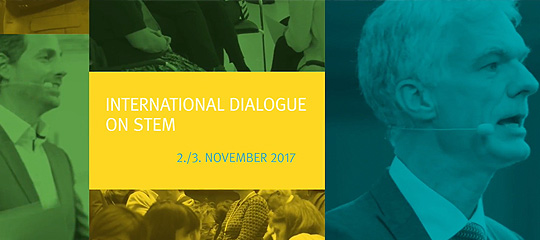
Fresh inspiration on early childhood education came during the »International Dialogue on STEM« in November 2017, which Siemens Stiftung hosted together with the Haus der kleinen Forscher (Little Scientists’ House) in Berlin. The conference sought to facilitate an exchange of similar initiatives from all over the world for mutual learning, inspiration, and encouragement. Education experts discussed which skills and abilities children will need for a worthwhile future, and ways to support the pursuit of teaching these valuable lessons.
Letting go thanks
to new structures
In some regions, Experimento has become so well established that Siemens Stiftung can start to pull back. Working with universities has been particularly helpful in turning the education program into a long-term success, with Experimento now being introduced to university students enrolled in teacher accreditation programs. In South Africa, multipliers were so taken by the program that they established the STEAM Foundation in September 2017 – an independent non-profit organization that conducts fundraising with international companies based in South Africa. »Experimento is becoming a South African project thanks to a solid local structure,« observes Rebecca Ottmann. »The STEAM Foundation can provide a boost to Experimento in South Africa.«
Siemens Stiftung has also recognized the need for flexible structures in its Media Portal. Starting back in 2008, the foundation has provided free downloads of digital teaching and learning materials for Experimento and lessons in science and technology. The materials are available in German, English, and Spanish, and nearly 50,000 teachers around the world make use of the portal. In its Paris Declaration of 2012, UNESCO called for education materials to be distributed under an open license. Siemens Stiftung was one of the first non-profit stakeholders to comply. A large portion of the approximately 5,500 worksheets, interactive whiteboard contents, experimentation instructions, and videos are available as Open Educational Resources (OER).


Musicians from all 54 African countries can network and further their education on the Music In Africa platform. Beyond that, one of the online portal’s most important goals is to make Africa’s rich music scenes internationally marketable. One thing was clear when Siemens Stiftung, together with the Goethe-Institut, first launched the project: long-term success meant the platform would need to be based in Africa. As a result, the Music In Africa Foundation was founded in 2011 in Johannesburg. The foundation’s operational side is staffed exclusively with music experts from Africa.
»For far too long, institutions tried and failed to steer development projects from Europe,« says the project lead, Jens Cording. »Establishing an independent, pan-African foundation was just the next logical step.« With regional offices in Johannesburg, Kinshasa, Dakar, Lagos, and Nairobi, around 18,000 artist profiles, and 160,000 users every month, Music In Africa has become the largest cultural platform on the continent.
Currently, the biggest challenge facing the Music In Africa Foundation is coming up with sustainable revenue structures to keep the online portal up and running. The plan is for the platform to achieve financial independence by 2022 through ads, donations, and event revenue. Prospects are bright – music, after all, is is an unlimited resource.

But as a foundation that also works in developing countries, Siemens Stiftung knows that OER alone are not enough. In sub-Saharan Africa, for example, teachers can often access the OER materials on their mobile phones, but technical limitations mean the materials cannot be put to use in the classroom. To solve the problem, the education materials are also provided in analog form at the universities and schools working with Siemens Stiftung.
The members of the Media Portal team do not always find it easy to let go of »their« educational media. »We put a lot of work into these materials and retain the copyrights on the worksheets,« explains the head of the project, Franziska Frost. »There are various OER licenses to choose from, and we opted to use the Creative Commons License CC BY-SA. We provide high-quality products, and teachers can adapt them as they see fit, apply their own creative twists, or pass them along to others as long as they name the original author and republish the material under the same license.«
Franziska Frost sees clear benefits to this approach. »OER are part of a culture of sharing. As a non-profit foundation, that’s something we want to pursue,« she says.
Improving the pedagogicallyrelevant use of digital education materials and combating preconceptions about the very idea of digital education is a large task – one that is best addressed as a team. To this end, Siemens Stiftung has joined with six other foundations to establish the Forum Bildung Digitalisierung (Forum Education Digitalisation) for dialogue between education practitioners and politicians. In addition, 38 schools have created concepts within the framework of the forum to demonstrate how digital education can succeed in the classroom. And that is just the beginning: The goal is to share the results with schools across Germany. »The only way we can take on the big challenges in education is to work together,« says Nathalie von Siemens. »As a group of experts from civil society, we cluster our knowledge and resources to become a persuasive voice in political discourse. The visibility of each of the participating foundations takes a back seat to the common goals of the forum.«
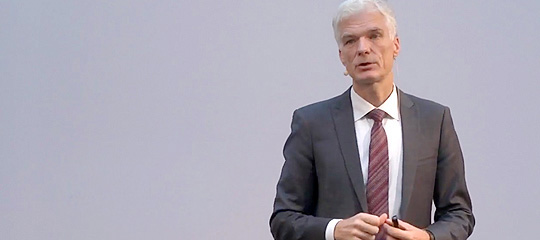
Looking to the future, Siemens Stiftung will continue to collaborate with partners on adapting the foundation’s strategies to new challenges. This approach is shaped to a large extent by the rapid pace of change. Andreas Schleicher, OECD Education Director and head of the PISA international school performance study, put it this way at the »International Dialogue on STEM«: »We used to learn to work – now learning is the work!«